
AI-generated illustration
Relocation does not close the route
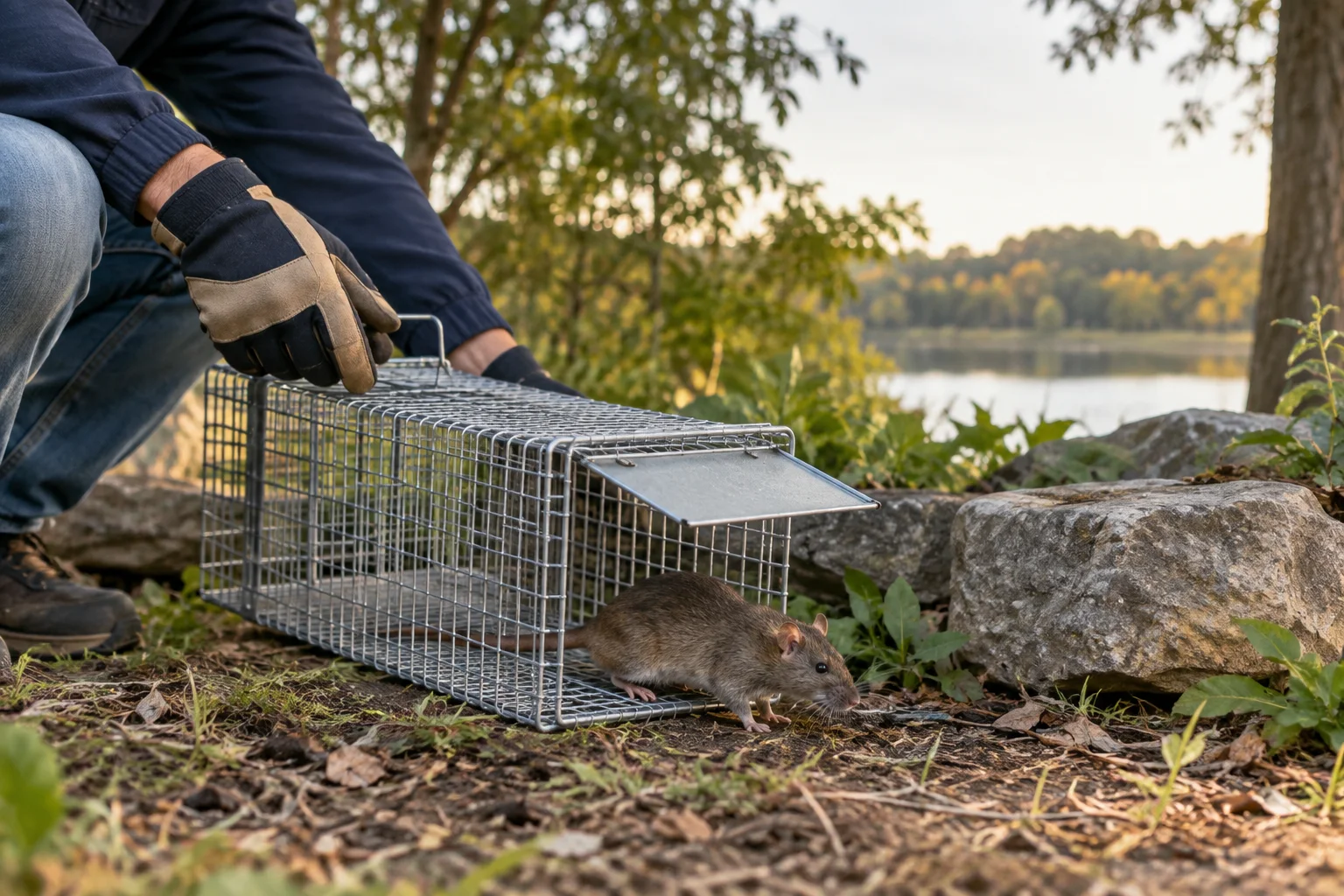
A homeowner who catches a rat may want to release it far away and be done with the problem. That impulse overlooks the house conditions that allowed the rat indoors. An open vent, food source, dense cover, or garage gap can attract another rat after the first one is gone. Releasing an animal elsewhere also shifts a human-created problem to another property or habitat without repairing your own building. The useful question after a capture is what the trap taught you about the travel route.
CDC does not recommend live traps for home rodents, explaining that frightened rodents may urinate and increase the chance of illness. UC IPM likewise does not recommend live trapping rats for nonprofessionals and notes that a trapped rat must be humanely euthanized or immediately released at the capture area under its cited rules. Local laws differ, but moving an animal across town should never be treated as a casual default. Check local requirements and seek professional advice rather than assuming a park or wooded area is an appropriate release site.
Choose a method before you set the trap
The simplest way to avoid a relocation decision is to use a monitored rat-sized snap trap for a confirmed indoor rat. CDC recommends traditional snap traps, placed in protected areas where rats are active and out of reach of children and pets. This is not an invitation to set traps indiscriminately. It is a reminder that the equipment, placement, and disposal plan should be selected before capture, not improvised after an animal is contained.
If you already have a live-captured rat, do not leave it in a garage, car, porch, or sunlit yard while you decide. Keep children and pets away, avoid handling the animal or putting your face near the trap, and contact a qualified pest professional or local animal-control resource for direction consistent with local rules. Do not try to feed, medicate, or transport the animal in an unsuitable container. The immediate priority is a controlled, lawful resolution with minimal exposure.
Use the capture as inspection evidence
A live trap or a snap trap location can reveal a great deal. Note the date, exact location, what bait was taken, and nearby signs such as droppings, gnawing, or a loose vent screen. Then walk outward from that point. Look for a gap at the base of a door, a utility line opening, an attic vent, a crawl-space panel, or a route from vegetation and stored goods. A capture behind the refrigerator, for example, may point to an appliance void or a kitchen plumbing penetration rather than a problem at the opposite end of the house.
Do not seal every opening before determining whether other rats remain inside. CDC recommends trapping until there are no more rodents, and it treats a week without captures or new signs as a useful indicator that the rats are gone. A professional can help plan the timing of exclusion when there is an active route. The objective is to remove the population using the space, then make the path unavailable. Releasing one animal does neither task completely.
Clean up a catch safely
Whether a rat is caught in a snap trap or found dead after removal work, wear rubber or plastic gloves. CDC recommends spraying the rodent, trap, and surrounding area with disinfectant until wet and letting it soak for five minutes or the product label's contact time. Place the rodent and used trap in a plastic bag, seal it, then put that bag in a second sealed bag before disposal in a covered garbage container. Wash gloved hands before removing gloves and wash bare hands afterward.
Traditional snap traps can be reused when disinfected correctly. CDC describes soaking the trap with the rodent still attached, then dropping the rodent into a bag, rinsing the trap, and allowing it to dry. Do not sweep or vacuum nearby droppings dry. Wet them with disinfectant first and wipe them up with paper towels. If there is a heavy accumulation, a nest in a wall, or contamination in an air duct, use professional help rather than trying to carry a difficult cleanup through living spaces.
Repair the conditions that brought the rat in
Once active interior signs have stopped, seal verified gaps with durable materials suited to the building feature. UC IPM warns that rats can chew through plastic, foam, wood, and caulk, so soft filler alone is not a dependable barrier. A tight door sweep, repaired vent screen, fitted metal barrier, or properly sealed utility penetration may be needed. Do not block an appliance vent, chimney, drain, or other system without knowing how it must function.
Reduce the nearby food and shelter at the same time. Keep garbage lidded, store feed securely, pick up fallen fruit, remove outdoor pet food after meals, and thin dense vegetation or clutter close to the house. These actions matter because rats use familiar routes and resources. A release at another location does not erase the invitation at yours. A repaired, less rewarding property does.
When professional help is the humane practical choice
Professional assistance is sensible when a rat has been live-captured, when a person is not comfortable handling any trap, when there are multiple signs of activity, or when the route lies in a roof, wall, duct, or crawl space. Ask how the company will identify the species and entry points, protect pets and children, handle catches, and confirm the work is complete. A plan that includes exclusion and monitoring is more valuable than a promise to remove an animal once.
Avoid trying to make a rat problem disappear through long-distance release or a sequence of improvised live traps. That can create a recurring job and expose people to an animal that is stressed and difficult to manage. Good home rodent control is measured by no fresh signs, no accessible food or shelter, and no entry path—not by the distance a single animal was carried away.