
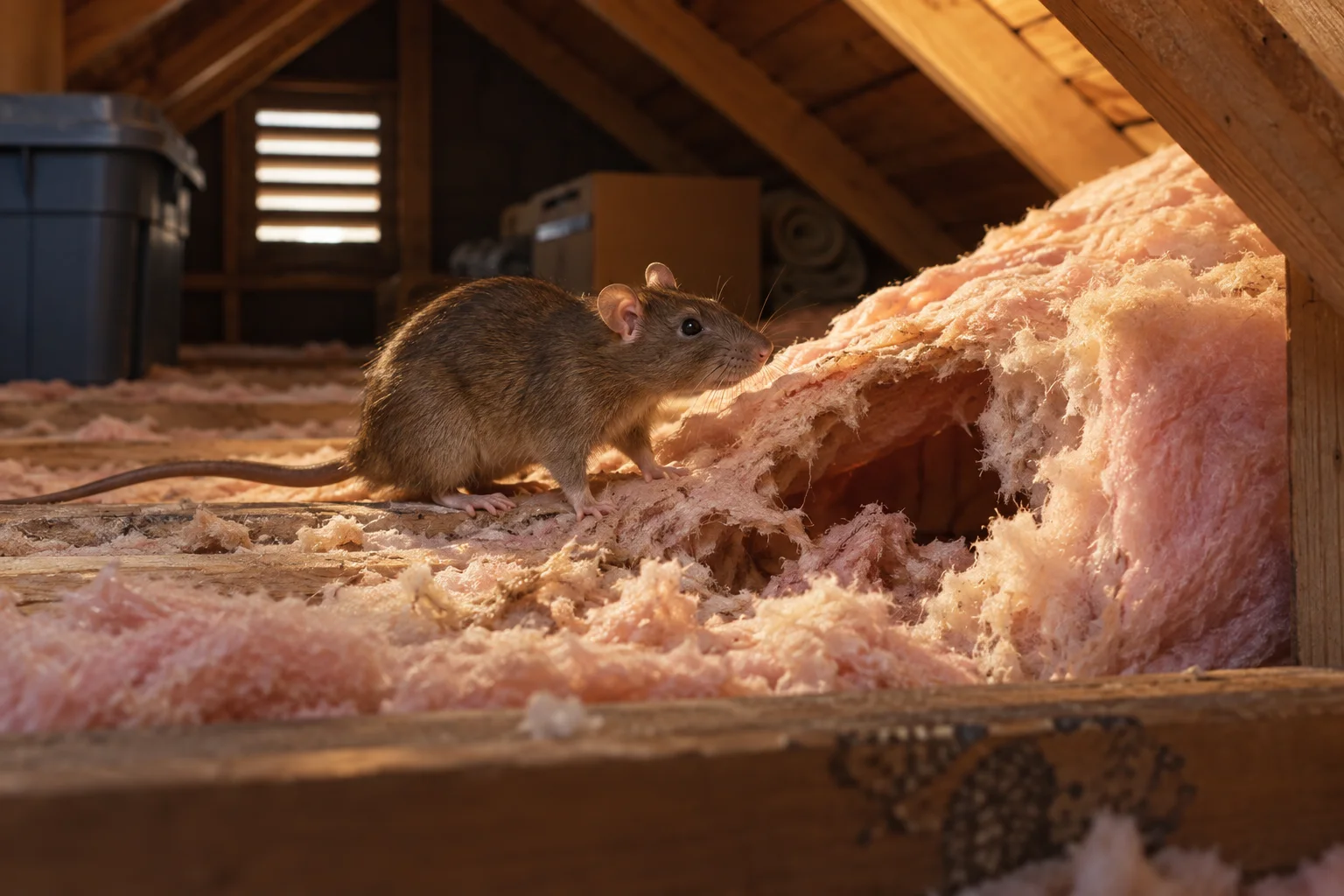
AI-generated illustration
Insulation is attractive nesting material
Loose-fill and batt insulation can give rats warmth, concealment, and material for a nest. UC IPM notes that rats shred insulating materials in walls and ceilings and that roof-rat attic activity can cause significant damage. The issue is not simply flattened fluff. Tunnels, concentrated nests, urine, droppings, and gnawed nearby systems can reduce the insulation's usefulness and create a cleanup problem. A homeowner should first determine whether the damage is current and where the rats entered.
Look for evidence from a safe attic position: localized shredded areas, tracks in dusty surfaces, nesting material, fresh droppings, gnawed rafters or wiring, and daylight at an eave or vent. Do not rake through insulation or step between joists to inspect it. Photograph the findings and note the nearest exterior feature. A damaged patch may be the final nesting site, while the entry point is a loose roof vent or an upper-wall gap several feet away.
Do not dry-clean rodent-contaminated insulation
CDC says not to sweep or vacuum rodent droppings, urine, or nesting material because dry disturbance can put contaminated particles into the air. That guidance is especially important for loose attic insulation. A shop vacuum may look efficient, but it can create dust and spread contamination through an awkward enclosed space. Do not use a leaf blower or compressed air to expose a suspected nest. First determine whether the material is limited and accessible or widespread and embedded in the insulation.
For limited accessible waste on a hard surface, CDC directs users to wet the material thoroughly with disinfectant, wait five minutes or the label contact time, then wipe it up while wearing gloves. Insulation is different from a hard floor. CDC advises bagging exposed insulation contaminated with urine and droppings for removal. When contamination is broad, the attic is unsafe to reach, or electrical damage is present, a remediation or insulation professional should plan dust control and removal.
Remove active rats before replacing material
New insulation does not solve an active route. Do not pay for replacement before rats have been removed and the building opening has been identified. CDC recommends checking how rodents entered before trapping those that remain. For confirmed indoor rats, traditional rat-sized snap traps in protected, accessible locations are recommended. Do not hide traps in insulation or use a location that cannot be checked daily. A professional can handle difficult attic routes and coordinate removal with exclusion.
Do not seal every exterior hole while rats may still be in the attic. That can trap animals in a cavity and cause them to chew elsewhere. Use evidence to decide the sequence: establish current activity, remove active rats, confirm a quiet period, then make final repairs. A week without captures or fresh signs is a useful CDC milestone. It is also a better point to schedule insulation work because the new material is less likely to be contaminated immediately.
Check wiring, ducts, and the roofline
Insulation damage can hide a more serious issue. UC IPM warns that rats may damage electrical wires and that attic activity can create electrical sparks and fire concerns. Do not pull insulation away from wiring or repair a chewed cable yourself. An electrician should inspect suspected electrical damage before insulation is replaced. An HVAC professional may need to inspect chewed or contaminated ducts, and a roofer may need to repair the eave, vent, or flashing defect that gave access.
Ask each professional to document the area inspected and any work completed. This makes it less likely that new insulation covers a damaged junction box, duct tear, or unsealed opening. Do not block a functional vent or plumbing feature with insulation or screen without knowing the building requirement. Good repair preserves airflow, drainage, and service access while eliminating the rat-sized gap.
Choose a cleanup scope based on evidence
A few droppings beside an attic hatch do not necessarily mean the whole attic must be stripped. A broad trail of waste, a strong odor, many nests, wet insulation, or signs of gnawed wiring are different. Request an assessment that distinguishes contaminated material, sound material, building damage, and active rodent evidence. Ask how material will be bagged, how dust will be controlled, and how the space will be disinfected without damaging the ceiling below.
Do not accept fragrance treatments as a substitute for removal. Odor can remain when urine is absorbed by insulation, but scent products do not repair the entry route or remove affected material. For a heavily contaminated attic, CDC's special precautions for heavy infestations may apply. The correct personal protective equipment and cleanup process depend on the scope, which is why a professional assessment is sensible when the damage is more than small and accessible.
Prevent another insulation loss
After removal and cleanup, repair confirmed attic vents, soffits, eaves, roof penetrations, and utility gaps with durable materials. UC IPM notes that rats can chew soft foam, plastic, wood, and caulk, so use a fitted material suitable for the feature. Trim branches or climbing vegetation that connect cover to the roofline. Secure food, feed, garbage, and fallen fruit so the property does not keep rewarding a rat that finds the exterior.
Reinspect after storms, roof work, and seasonal changes. Check the attic from a safe point for fresh droppings or disturbed insulation rather than climbing through it repeatedly. If a new damaged area appears, return to the exterior route and professional inspection. Good insulation repair is not just replacing material; it is restoring a dry, safe attic that rats cannot reach.