
AI-generated illustration
Avoid a simple predator-versus-prey story
Rats are omnivorous, adaptable animals. They eat plant material, human food, animal food, and, under some circumstances, other animals or animal eggs. That does not support a reliable household list of animals a rat will “commonly kill.” Species, body size, food availability, season, habitat, individual behavior, and opportunity all matter. A rat seen near a nest, pet dish, or dead animal is not automatically the killer. It may be feeding on spilled food, scavenging an animal that died for another reason, or using the same sheltered area. Evidence has to connect the behavior to the event.
Laboratory and ecological studies show that predatory behavior in rats can vary substantially. For example, research on rat killing behavior has documented differences among strains and sexes in controlled settings. That supports caution about broad personality claims, not a claim that a rat in a yard is hunting every nearby animal. The useful homeowner question is practical: does the property supply food, protected nesting cover, or access to vulnerable confined animals? If it does, change those conditions and seek help with confirmed rat activity rather than trying to create a confrontation.
What “kill” may mean around a property
A dead small animal is often an uncertain scene. It could have died from illness, injury, weather, a larger predator, a cat, a vehicle, or another cause before a rat arrived. Scavenging is not proof of predation. Similarly, a disturbed bird nest may have been affected by weather, another wildlife species, or human activity. Do not handle a carcass bare-handed and do not use an accusation against rats as a substitute for inspection. Take a photo from a safe distance, keep pets away, and consider local wildlife guidance if the animal is protected or the event is recurring.
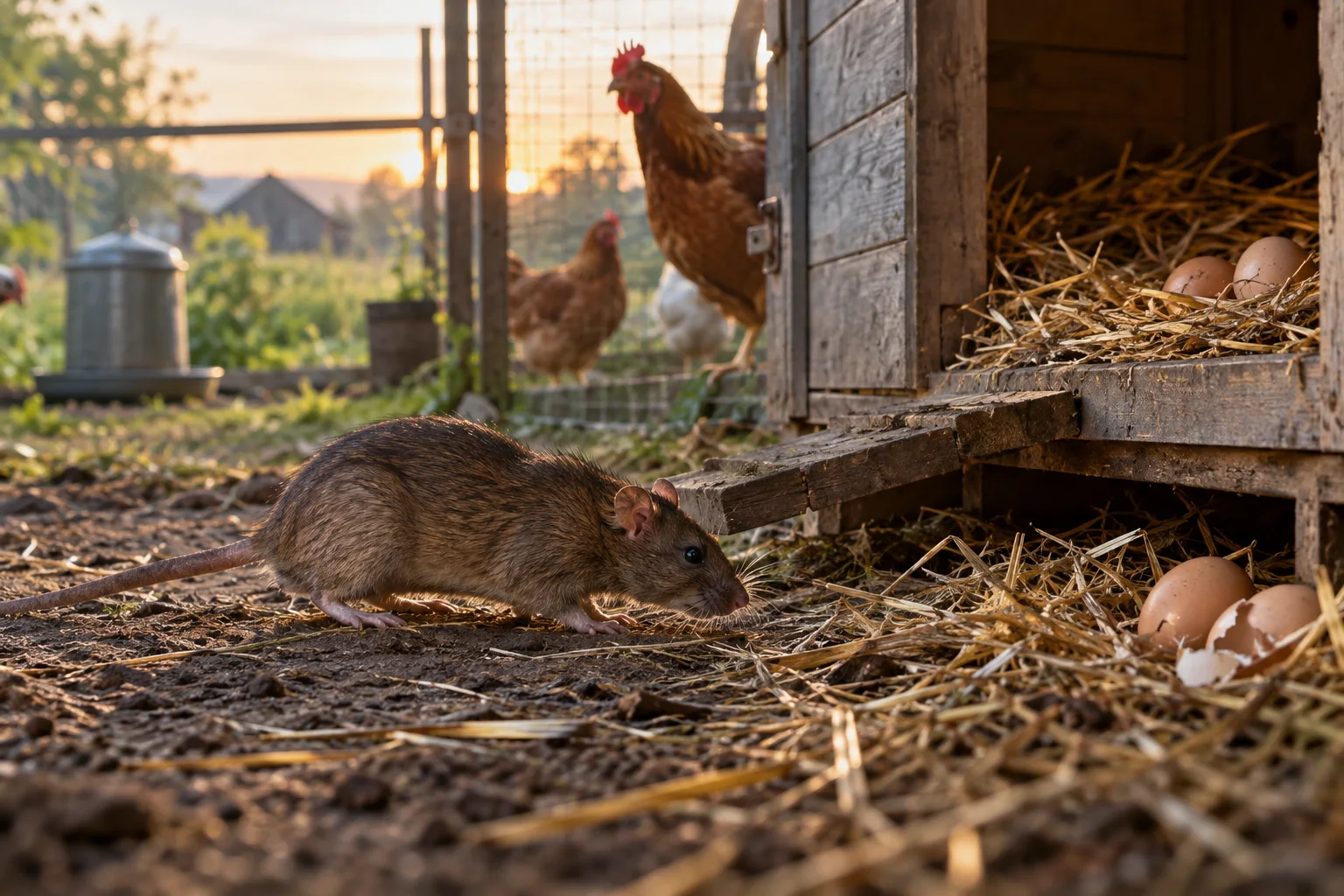
At the same time, a rat problem can threaten resources that small animals need. Open feed, accessible eggs, spilled seed, uncovered scraps, and sheltered nest sites attract rats. A chicken coop, aviary, rabbit hutch, or outdoor enclosure should be assessed for secure food storage, sound mesh, latch condition, and ground-level gaps. The goal is to prevent access, not to stage a trap or fight at the enclosure. If an enclosure is damaged or animals have been injured, contact a veterinarian or an appropriate animal-care professional for the animals and a qualified exclusion professional for the access route.
Protect companion animals through separation
Do not rely on a cat or dog to solve a rat problem. A pet can be bitten, may eat a rodent or bait, and may make a frightened rat run into a wall or crawl space. Feed pets indoors when possible, or remove bowls after meals. Store feed in intact containers with tight lids. Supervise small companion animals outdoors and keep cages or hutches in good repair. These measures reduce direct contact without teaching a pet to pursue wildlife.
If a pet catches, mouths, or may have eaten a rat, unknown bait, or a carcass, contact a veterinarian for advice and describe what happened. Do not induce vomiting or give a home remedy unless a veterinary professional directs it. Keep any product packaging or clear photos of the material available. The same applies when an animal shows a new wound or sudden illness after contact with a rodent area. A veterinarian can assess the individual pet; a homeowner cannot determine disease or poisoning from behavior alone.
Make the property less useful to rats
Rats persist near predictable food and cover. Secure garbage, birdseed, livestock feed, and pet food; clean outdoor cooking residue; pick up fallen fruit; and manage compost so food scraps do not become an open feeding site. Reduce dense vegetation, piles of stored materials, and clutter against structures that provide hidden travel paths. Inspect exterior doors, vents, pipe penetrations, garage edges, and roofline features so the rat does not move from the yard into a building.
This prevention work benefits wildlife as well as a house. Loose poison and exposed traps in a yard can harm animals other than the target. EPA notes that rodenticides can affect pets and wildlife directly and can also harm them if they eat a poisoned rodent. A visible, tidy property with secured food sources reduces the need to put wildlife at risk. Where food sources are shared across a property line, a calm conversation or coordinated property inspection can be more useful than trying to control one corner alone.
Respond to a confirmed rat problem with controlled methods
If current signs confirm rat activity, use a removal plan that can be monitored. CDC recommends traditional rat-sized snap traps and advises placing them where rodents travel, protected from children and pets, and checked daily. The exact placement should follow evidence, such as a protected route along a wall or inside a secured structure, rather than a random open place in the yard. CDC advises against glue and live traps because frightened rodents can urinate. Do not attempt to grab, corner, or fight a rat with a tool or pet.
Pesticides need even more restraint. Use only an EPA-registered product exactly as its label directs, in a place where non-target access can be prevented and the equipment can be inspected. Do not scatter loose bait around nests, compost, or animal enclosures. If a situation involves repeated attacks on confined animals, a large outdoor population, an inaccessible route, or potential wildlife conflict, hire a professional who can identify the evidence, protect non-target species, and repair the route after removal.
Keep ecology in the answer
Rats are part of food webs: they can eat a range of materials and are themselves prey for other animals. That fact does not make an established rat population harmless around homes, food, or vulnerable animals. It does mean sensational claims about a rat hunting every pet or bird are not a sound basis for action. Use evidence from the actual site. A chewed feed bag, protected runway, fresh droppings, or a compromised enclosure suggests a practical repair; a single unexplained carcass suggests investigation before blame.
The responsible outcome is a property where pets are supervised, animal feed is secure, small enclosures are sound, wildlife is not deliberately drawn to food, and rats lack a route into the house. That outcome comes from separation, sanitation, exclusion, and monitored control when needed. It does not require a homeowner to encounter an animal face to face. If an event raises concern about an injured pet, protected wildlife, or an unexplained cluster of animal deaths, bring in the appropriate veterinary, wildlife, or public-health authority rather than relying on a rat story.