
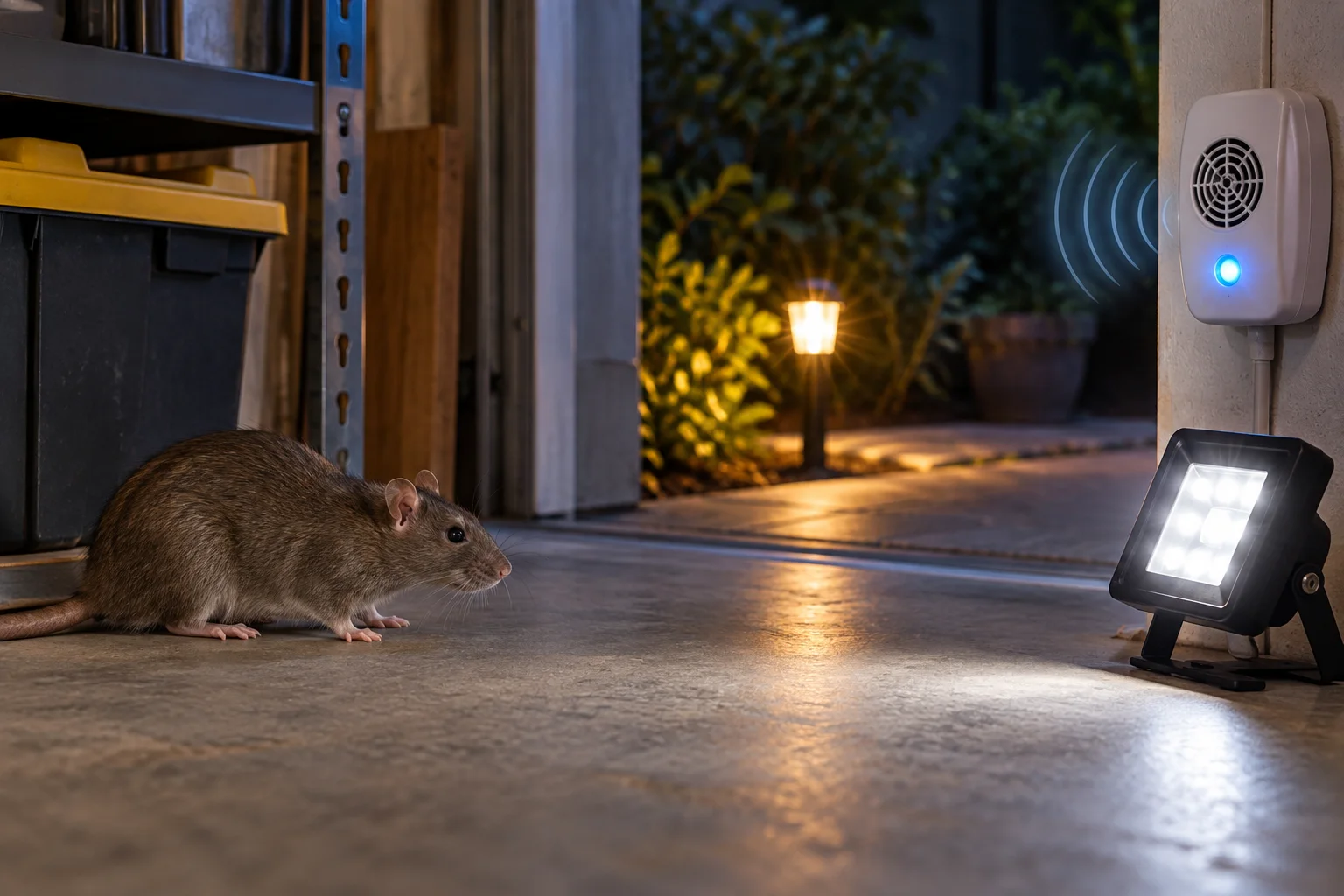
AI-generated illustration
A surprise is not a lasting control method
A strobe light or high-pitched sound may cause a rat to pause or change direction when it is first introduced, especially in a quiet enclosed space. That short reaction does not establish lasting control. Rats learn routes and can habituate to repeated, non-harmful stimuli, particularly when food, shelter, and an easy entry route remain available. A device that makes a room unpleasant for people can still leave the property entirely usable to a rat.
Marketing claims often blur the difference between a temporary disturbance and verified exclusion. Ask what evidence shows the device prevents entry, removes existing animals, or changes a population over time. A sound that humans cannot hear is not automatically effective, and a visible strobe is not automatically safe for everyone around it. Do not rely on testimonials or the absence of noise for proof that a building is rodent-free.
High-frequency sound has practical limits
Rats can hear higher frequencies than humans, but that fact alone does not make an ultrasonic appliance an effective repellent in a house. Sound reflects, is absorbed by soft materials, is blocked by walls and furniture, and weakens with distance. A unit in one room cannot reliably cover a maze of cabinets, wall voids, ducts, basements, garages, and exterior routes. An animal can also move around the device or use an adjacent protected space.
Do not place electronics where they create a trip, moisture, heat, electrical, or pet-safety problem. If someone in the home is sensitive to flashing light or has a health condition affected by visual stimuli, avoid assuming a strobe is harmless. A product should never be positioned to interfere with alarms, exits, required lighting, or safe movement through a property. The burden of proof belongs to the product claim, not to the frightened homeowner.
Light can change observation, not building access
Good fixed lighting can sometimes help people inspect a garbage area, foundation edge, or doorway safely. That is different from using a flashing light as pest control. Bright or strobing light can make an animal choose a darker nearby route, while leaving its food source, burrow, or entry point intact. It can also disrupt people, neighbors, and pets. If a rat disappears after a light is installed, it may simply have become harder to see.
Use lighting for safe maintenance. Illuminate waste storage, repair work, and exterior inspection points so leaks, burrows, spilled food, loose screens, and gaps can be found. Then correct the conditions observed. A reliable plan is based on barriers and resource management that remain effective whether the lights are on or off.
Start with what rats actually need
Rats seek food, water, shelter, and routes. Secure garbage, pet food, feed, and stored food; clean spills; address leaks; remove dense cover and clutter near the structure; and inspect doors, vents, foundation gaps, and utility penetrations. These actions may feel less dramatic than an electronic device, but they affect the reasons a rat keeps returning. They also make new activity easier to see and document.
In a shared building, identify which conditions are inside a unit and which belong to common spaces or management. A tenant cannot safely seal a utility opening that needs professional repair, and one resident cannot correct a commercial waste area alone. Give the responsible party a specific report with dates, photographs, and the location of fresh signs. This is more likely to produce a repair than a dispute about whether a sound machine worked.
Use monitored removal when activity is confirmed
For an indoor rat problem, CDC recommends traditional snap traps and advises against glue traps and live traps. Use rat-sized commercial traps in protected locations based on real travel evidence, and check them regularly. If traps, bait, or inspection work cannot be done safely because of children, pets, wiring, contamination, or inaccessible spaces, obtain qualified help. Do not build dangerous electrical devices as a substitute for a commercial control plan.
Follow removal with repair and repeated checks. A quiet period after installing a sound machine does not distinguish between departure, changed route, and a missed observation. The absence of fresh droppings, damage, captures, or camera activity after food access and entries are corrected is much stronger evidence. Strobe lights and ultrasonic devices can be optional comfort tools if used safely, but they should not be presented as the answer to a property condition that needs real maintenance.
Test the claim against physical evidence
Keep the product information when a seller makes a specific performance claim, but judge the result by the property. A device that remains plugged in while new droppings, gnawing, or camera activity continue is not resolving the route. A camera, ordinary light, or safe inspection can document movement without trying to frighten an animal, and that evidence can guide repair and monitored removal.
A repair to a confirmed entry or waste condition can be inspected and maintained. A device that promises to repel may run indefinitely without showing a benefit. Compare the original signs with repeated observations after food access and entry routes are corrected, then decide whether the device has any useful role beyond temporary reassurance.