
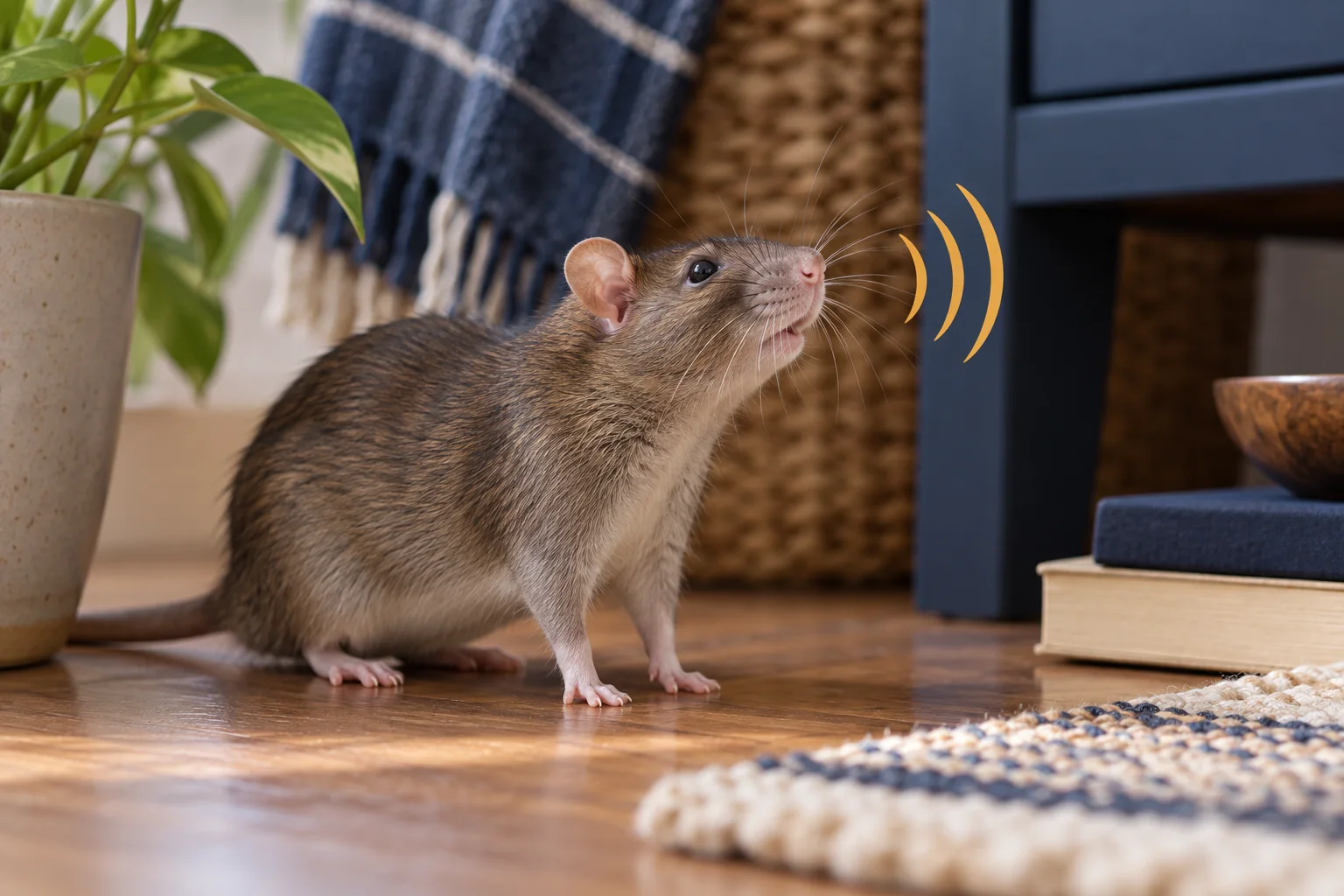
AI-generated illustration
A chirp is not a species test
A chirping sound near a wall, attic, garage, or yard can make people wonder whether rats are calling. Rats do vocalize, but an audible chirp by itself does not identify a rat. Many insects, birds, small mammals, appliances, pipes, alarms, and electronic devices create brief repeating sounds. A building can also transmit a noise from another room or outdoors, making its apparent location misleading.
Treat the sound as a prompt to gather context. Note the time, how long it lasts, the weather, and whether it occurs near a specific appliance, vent, or exterior wall. Look for physical signs from a safe distance: droppings, gnawing, disturbed insulation, burrows, damaged food, or an animal on camera. If none are present, do not escalate to traps or pesticide solely because a sound resembles an online recording.
Rat calls span audible and ultrasonic ranges
Research on laboratory rats describes both audible vocalizations and ultrasonic vocalizations. Adult rats are often discussed in relation to calls around 22 kilohertz and 50 kilohertz, while pups can make other calls in separation contexts. Much of that activity lies outside the normal range of human hearing. This means the social sounds rats use most often may be unavailable to a person listening in a house.
The research should be interpreted cautiously in a home. Frequency categories describe measured calls under particular biological or laboratory conditions; they are not a key for diagnosing a wild rat behind drywall. A person cannot reliably infer a rat's emotion, sex, age, or number from a sound they think they heard. Wild settings contain echoes, mechanical noise, and other animals that make confident interpretation even harder.
When rats may make audible sounds
Rats can produce audible squeaks or distress sounds during close encounters, conflict, handling, pain, or other acute situations. Movement and gnawing can be louder and more commonly noticed than a vocal call. An animal moving through loose insulation may create a rustle that people describe as chirping because it comes in quick bursts. The description is useful, but it should remain a description until evidence supports an identification.
Avoid trying to provoke a sound by chasing, striking a wall, using high-frequency devices, or releasing a pet into a suspected void. Those actions can make an animal relocate, damage the building, or put people and pets at risk. If an animal is visible, keep distance and record the location. If the sound is the only evidence, inspect ordinary building causes before treating an unseen wildlife problem.
Check common alternatives first
Crickets and other insects can create regular chirps, especially in warmer areas or near vegetation. Birds can vocalize from vents, chimneys, eaves, and rooflines. Smoke alarms may chirp on a low-battery schedule, while electronics and HVAC equipment can make intermittent beeps or clicks. Plumbing noises often follow water use or temperature changes. These patterns can help decide whether a maintenance or wildlife inspection is more appropriate.
Do not block a vent, chimney, drain, or electrical device because a noise is frustrating. Those systems have safety functions. If an appliance or electrical area is involved, use a qualified service person. If a vent or roof feature is suspected, a professional can inspect without turning an uncertain chirp into a damaged or unsafe building system.
Use evidence to choose the response
If evidence points to rats, focus on the accessible resources and route rather than the chirp. Secure food and garbage, remove nearby shelter, inspect the exterior, and coordinate exclusion with removal. Norway rats often use lower-level burrows and foundations, while roof rats can use climbing routes and upper structures. These tendencies direct an inspection but do not replace it.
For confirmed indoor activity, CDC recommends traditional snap traps and advises against glue traps and live traps. Use only appropriately sized devices in protected, monitored locations. A sound may stop because an animal changed routes, a mechanical condition changed, or the animal was removed. Follow-up should therefore look for fresh signs and sound repairs, not rely on silence alone.
Document uncertainty honestly
It is useful to say, I heard a repeated chirp near the utility room at 10 p.m., rather than claiming there are rats in the wall. The first statement records evidence; the second jumps to a conclusion. This distinction helps a property manager or professional plan the right inspection. It also reduces unnecessary treatment when the cause turns out to be an insect, bird, plumbing issue, or device.
If the noise continues with rodent signs, request a written account of what was found, where activity appears to be occurring, and what will be monitored after repairs. If it continues without signs, broaden the investigation. A good outcome may be a simple mechanical repair, a wildlife exclusion repair, or a rodent-control plan. The chirp has done its job when it leads to a safe, evidence-based answer. If you do record a sound, retain the unedited file with its date and note what else was operating nearby. Do not play recordings loudly or use sound devices to drive an animal from a concealed space. Loud disturbance can make a wildlife or rodent situation harder to inspect, and it does nothing to close the opening or remove food that supports repeated activity. The most informative observation is often visual: a camera view of a route, a photograph of a defect, or repeated fresh signs at a defined location. A chirp may then become one part of a pattern instead of the whole case. This protects against a common cycle in which an uncertain sound leads to random traps, more anxiety, and still no explanation for the noise. It is better to leave the cause unknown briefly than to apply a hazardous treatment to the wrong problem. When the source is confirmed, the response can be proportionate, documented, and much more likely to last.