
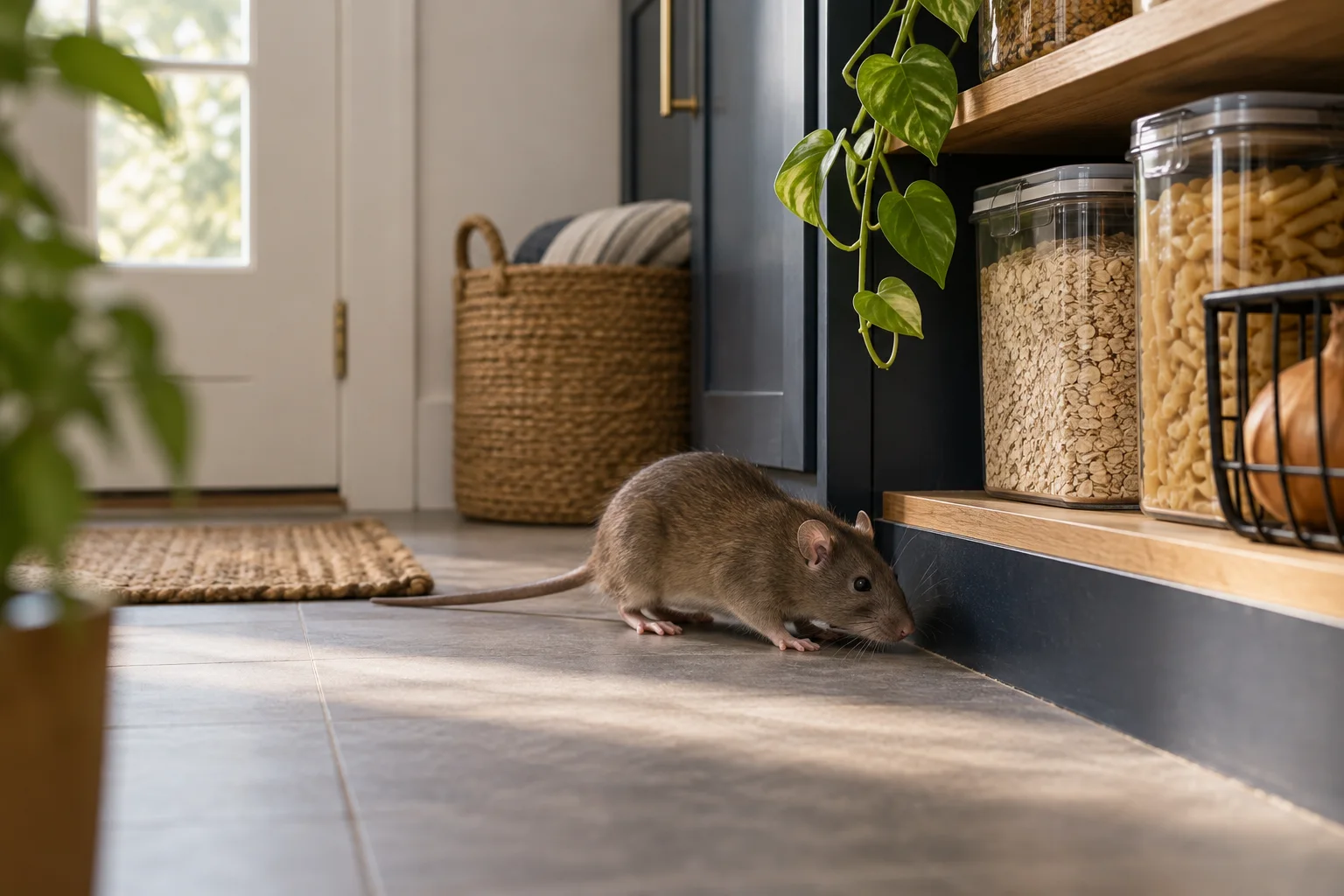
AI-generated illustration
Fear is a real part of the problem
Seeing a rat indoors can bring an immediate physical response: racing thoughts, nausea, shaking, or a strong need to get away. That reaction does not mean you are incapable of dealing with the situation. It means the first task is to reduce urgency. A rat sighting is information about an animal and a building route; it is not a requirement that you approach the animal, touch a trap, or inspect a dark room alone.
Move to a separate room if that helps, keep children and pets away from the immediate area, and avoid chasing the animal. Close an interior door only if it can be done without cornering yourself or disturbing the animal. From a comfortable distance, note the room, time, direction of travel, and any opening or food source nearby. A short written note turns an alarming event into useful information for a household member, building manager, or pest professional.
Choose jobs that match your comfort level
You do not need to perform every part of rodent control yourself. Some people can photograph a gap from outside but do not want to enter a basement; others can handle sanitation but prefer someone else to set traps. Divide the work into small roles: reporting the sighting, arranging an inspection, moving food into containers, scheduling a repair, and checking a professional report. Assign the uncomfortable tasks to a trusted person or qualified provider.
Do not force an exposure by reaching behind furniture, placing hands into a void, climbing into an attic, or trying to catch an animal. Those actions can create injury or contamination risks even for someone who is not frightened. If you rent, report the issue in writing with the exact location and fresh evidence. If you own the home, a pest-control inspection can identify the likely route and help you decide which building repairs need a contractor.
Build a plan before the next sighting
Anxiety often grows because the situation feels unpredictable. A simple written plan changes that. Keep food, pet feed, and garbage secured; identify who will contact the landlord or provider; decide which rooms can be closed off temporarily; and save the number of a local service. If you have a pet, arrange how it will be kept away from any control devices. If children live in the home, explain that they should tell an adult rather than investigate or handle a trap.
Ask a provider for a mapped plan: the evidence observed, proposed trap locations, suspected entry points, repair sequence, and follow-up date. Information reduces the temptation to repeatedly search the same room late at night. It also lets you ask specific questions. A professional cannot honestly promise that no animal will ever be seen again, but they should be able to explain how they will monitor activity and verify whether the identified route has been addressed.
Keep control measures low-contact and protected
For confirmed indoor activity, CDC recommends traditional snap traps and advises against glue traps and live traps. If a household member will manage traps, they should use appropriately sized devices in protected locations inaccessible to children and pets, and should check them regularly. If that feels unmanageable, ask the provider to do it. You do not have to prove courage by handling a captured animal or watching an inspection.
Avoid panic purchases that increase risk, including loose poison, unlabelled devices, smoke, or homemade chemicals. Rodenticides have label directions because they can harm people, pets, and wildlife. A trapped or dead rodent may also need careful disposal and cleanup. Keep the work contained, documented, and within your ability. A calm plan is more effective than a dramatic response that leaves toxic materials or damaged building systems behind.
Use safe cleanup boundaries
Do not dry sweep or vacuum rodent droppings or nesting material. CDC advises wetting contaminated material with disinfectant, allowing the product contact time stated on its label, and removing it with appropriate protective measures. If contamination is widespread, in insulation, in a difficult crawlspace, or mixed with damaged wiring, arrange professional cleanup rather than pushing through fear to do a job that is beyond ordinary household cleaning.
You can still contribute without entering the space. Photograph the condition from a safe doorway if possible, retain service reports, and make sure repairs follow cleanup. A fear response may ease when the affected area is no longer a mystery and the responsibility is shared. The objective is not to become comfortable around rats. It is to make the home less accessible to them while keeping you out of tasks that feel unsafe.
Get support for persistent fear
If fear of rats causes sleep loss, panic, avoidance of necessary rooms, or ongoing distress after the property issue is resolved, it may help to speak with a healthcare or mental-health professional. They can help with the anxiety itself while pest professionals address the animal problem. That is a practical response, not an overreaction. Fear can be treated separately from the building conditions that triggered it.
In the meantime, use evidence and delegation. Ask someone you trust to attend the inspection, read the written plan with you, or make the initial call. Keep updates brief and factual: where fresh signs were found, what was repaired, and when the next check occurs. With a defined plan, the sighting becomes a temporary maintenance problem rather than something that controls every decision in the home.