
AI-generated illustration
A citywide problem is built from local conditions
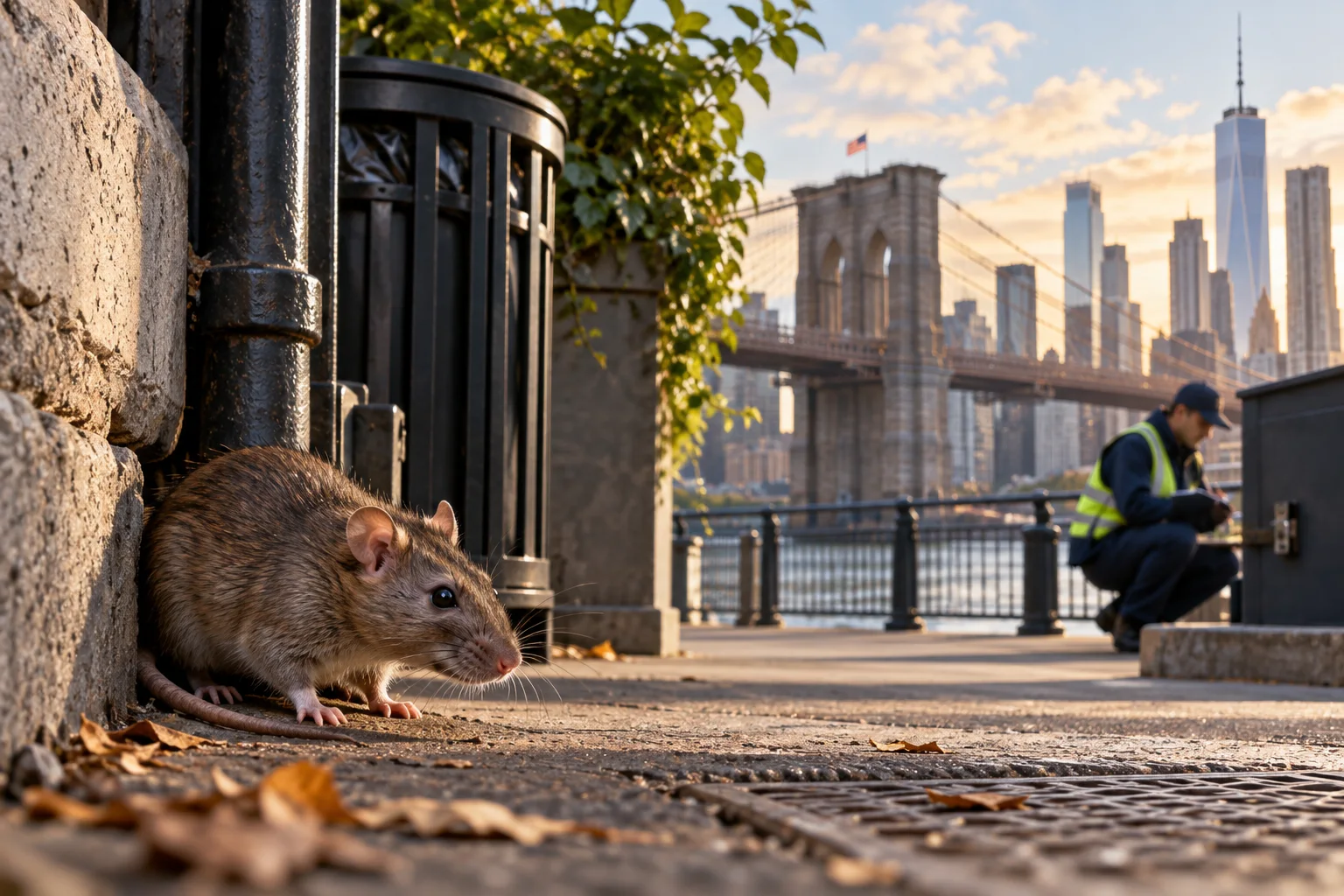
New York City has a highly visible rat problem because dense buildings, food waste, construction, landscaping, infrastructure, and connected properties can create repeated food, shelter, and travel routes. NYC Health explains that rats seek food, water, shelter, and safe ways to get around, and that garbage and clutter create both food and hiding places. The fact that rats are common in a city does not mean an individual property cannot improve its conditions.
Rats rarely exist on only one property. NYC Health notes that neighborhood response is often needed because activity can continue on a block despite an owner's efforts. This is why a rat seen near a subway entrance, park, restaurant, apartment building, or curbside trash should be understood as an environmental-management issue rather than proof that any one person caused it. Still, each property can reduce its contribution to the route.
Trash handling has a direct effect
Exposed garbage is food and cover. NYC Health recommends hard plastic rat-resistant containers with tight lids, enough capacity for occupants, and reducing curb time. Bag and tie garbage, keep container areas clean, and do not leave food for birds, pigeons, squirrels, or stray animals. A few loose bags beside a full container can establish a nightly feeding opportunity, especially near a basement, alley, or building foundation.
For a residence or business, inspect the garbage route from storage to curb. Look for torn bags, grease residue, overflowing bins, food in recycling, and clutter that hides rat travel. Do not assume a single cleanup ends the problem if nearby food remains. Coordinate with neighbors, building staff, and local businesses where shared waste conditions are involved. A block-level issue responds better when multiple properties use the same basic food-control practices.
Building access and shelter keep activity close
NYC Health advises repairing cracks and holes in foundations, sidewalks, and under doors, while removing clutter and storing items off the ground and away from walls. These measures matter in a city where basements, service lines, rear yards, garages, construction areas, and attached buildings create many concealed routes. A rat that finds a foundation defect or utility opening can move through a building even if it was first seen outdoors near trash.
Do not fill unknown holes with foam or block a drain, vent, or utility feature without knowing its purpose. Rats can defeat soft materials, and a building system still needs to drain and ventilate. Document the defect, then use a qualified trade professional for roof, electrical, plumbing, or HVAC work when needed. A pest professional can help identify the route, but durable building repair is what changes the animal's access.
Use NYC's reporting and information tools
NYC Health directs residents to submit rodent complaints through 311 with a description and address. Inspectors can inspect only accessible areas, so include contact information if the issue is in a private apartment, basement, or backyard and access must be arranged. The Rat Information Portal provides inspection results and follow-up information by address, borough, block, lot, or neighborhood. Check dates because a past failed inspection may have been corrected.
Tenants should report rat conditions to an owner, manager, or co-op association promptly. NYC Health says property owners are required to keep properties rat-free and may receive an order to correct conditions after an inspection. Tenants can use 311 when owners do not address rat conditions or related defects. Do not promise yourself that a complaint creates immediate free removal inside an apartment; the City's role, access, and follow-up depend on the property and report.
Public programs complement property work
NYC operates Rat Mitigation Zones and citywide programs that use coordinated inspection, education, cleanup, and integrated pest management. The City also offers Rat Academy training. These initiatives are useful because rat control is more effective when streets, parks, public housing, businesses, and private buildings reduce conditions that support rats. They do not replace daily garbage control, building repairs, or an owner's responsibility for an active indoor infestation.
If you own a home without tenants, NYC Health says you can place rodent bait yourself but recommends leaving that work to professionals. In commercial and multiunit properties and public spaces, NYC's guidance says pesticide application requires a New York State-licensed pest management professional. Follow current local rules, label directions, and building requirements rather than putting loose bait in a basement, sidewalk gap, or public area.
Make the individual response practical
At home, secure food and garbage, clean spills, remove dense cover and clutter, repair verified openings, and use protected, monitored rat-sized snap traps for confirmed indoor activity. CDC recommends traditional snap traps and advises against glue and live traps. If a rat is in a wall, roofline, duct, or inaccessible space, engage a professional rather than trying to chase it through an attached building.
A city rat problem can feel too large for one property owner, but local actions are still valuable when they remove a dependable food source or entry point. Use 311 and official data for a documented public or shared issue, and keep your own records of repairs and fresh signs. The durable outcome is a cleaner route from street to building: less exposed waste, less shelter, and fewer openings that can turn neighborhood activity into an indoor infestation. That coordinated approach makes follow-up inspections more useful, targeted, and specific.