
AI-generated illustration
A live cage is only the beginning
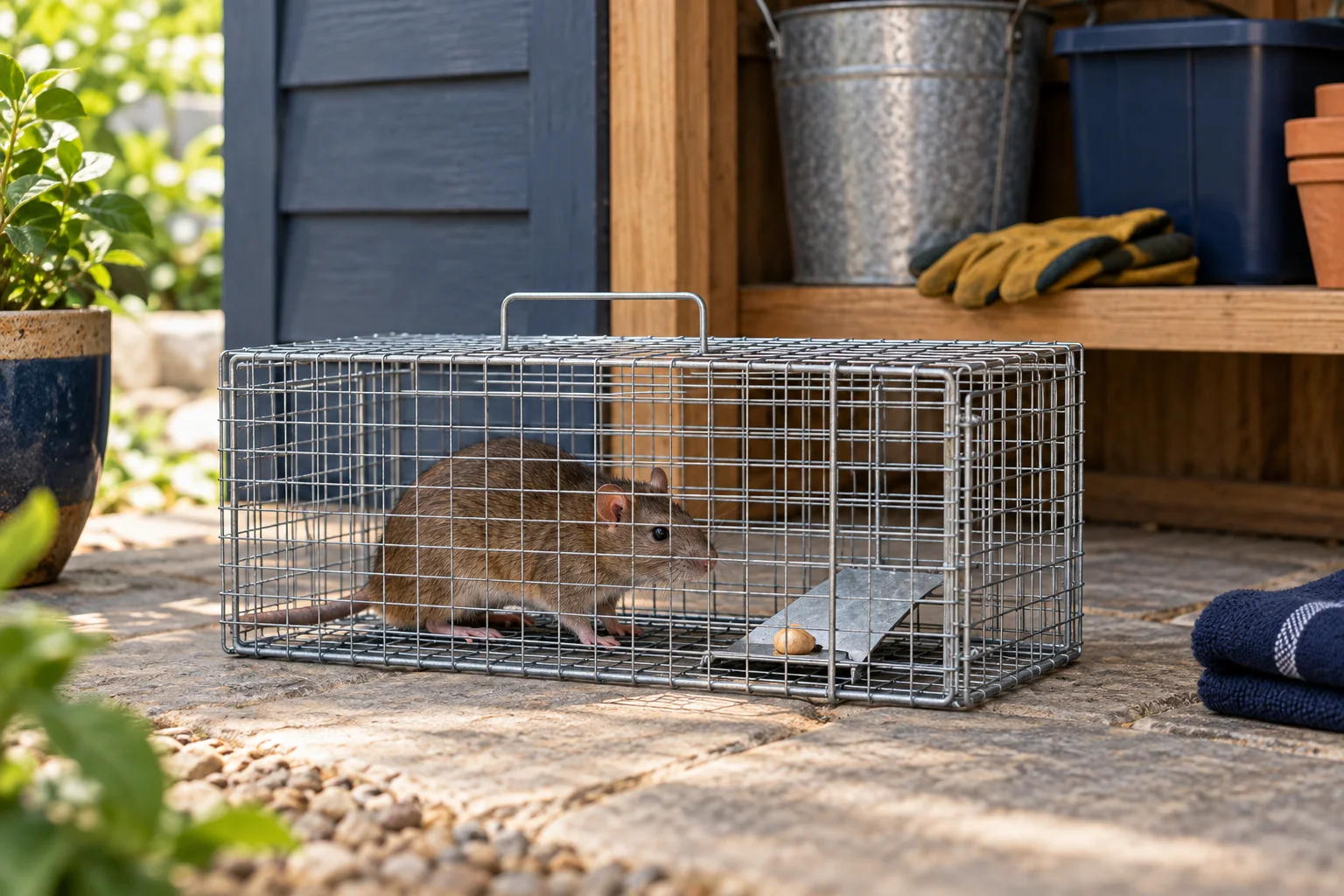
A live cage trap keeps an animal alive at capture, but that fact alone does not establish a humane outcome. The animal may experience confinement, weather exposure, injury, dehydration, panic, and repeated handling. The person who sets the trap becomes responsible for checking it promptly, protecting it from children, pets, and wildlife, and making a lawful decision about the captured animal.
This is why the first question is not whether a cage looks gentler than a snap trap. Ask whether the home’s problem can actually be resolved by capture and whether someone can safely manage every result. A live rat can bite, may urinate when frightened, and cannot be treated as a harmless package to carry around until a convenient time.
Public-health guidance sets a practical boundary
CDC advises against live traps and glue traps for household rodent control because frightened rodents may urinate and increase illness risk. CDC instead recommends traditional rat-sized snap traps for confirmed rat activity, placed where travel is documented and checked daily. This does not mean a homeowner should treat any killing device casually. It means the method should be controlled, monitored, and paired with safe cleanup and removal of the entry route.
A live trap can be useful in regulated wildlife work or by professionals with a lawful plan, but a homeowner should not assume that consumer availability makes it the best rat-control tool. If the only reason to choose a live trap is avoiding a difficult decision after capture, the decision has merely been postponed to a more stressful moment for both the animal and the person.
Release has legal and ecological limits
Rules about trapping and release vary by location, species, land ownership, and the authority managing wildlife. UC IPM says live trapping of rats is not recommended for nonprofessionals and notes that, in its context, trapped rats must be humanely euthanized or released immediately at the capture site. Local rules may differ, so a homeowner should not assume a distant release is lawful, welcome, or ecologically responsible.
Releasing a commensal rat at another property or natural area also does not repair the source building. It can move a problem to someone else, expose the animal to an unfamiliar environment, and leave the original food and entry route ready for another rat. A release at the capture site leaves the animal in the same territory. Neither outcome substitutes for identifying why the animal was using the house.
If a rat is already in a cage
Do not open a live trap near your face, try to touch the animal, transport it loose in a vehicle, or keep it overnight in a garage while deciding what to do. Keep children and pets away. Place the trap in a quiet, sheltered location only if that can be done without direct handling risk, and contact a qualified pest professional, local animal-control resource, or wildlife authority for advice that fits the local rules.
Give that person clear information: species if known, exact trap type and location, whether the animal is injured, whether there are pets or children, and whether the route is in a home, shared building, or outbuilding. Do not feed, medicate, or flood the trap. The goal is controlled transfer to someone who can handle the animal and the remaining property problem responsibly.
Avoid trapping the wrong animal
A cage trap placed casually can capture a non-target animal. Before setting any trap, inspect for evidence rather than assuming every scratching sound is a rat. Look for droppings, gnawing, burrows, travel routes, or a clear photo. Native woodrats and other small mammals may be present in some areas and can have different legal or conservation considerations. Identification may change the appropriate response.
Never use a live trap as a way to discover what kind of animal is entering the house if you cannot manage a capture. A camera, professional inspection, or other non-capture evidence may answer the question with less risk. This is especially important around bird feeders, gardens, pet areas, and places where other wildlife travels.
Choose humane control before capture
The most welfare-conscious outcome is often preventing entry in the first place. Secure food and pet feed, remove accessible outdoor rewards, reduce dense cover near the building, and inspect door sweeps, vents, crawl spaces, roofline features, and utility penetrations. Do not close an active route blindly if a rat may be inside; coordinate removal and final repair so it is not trapped in a wall or attic.
For confirmed indoor activity, a monitored method that CDC recommends is usually more practical than a live cage. If you cannot personally handle traps or cleanup, hire a professional. Ask how they will protect non-target animals, inspect equipment, handle catches, remove contamination, and document the entry repair. Humane intent is best expressed through preparation, prompt action, and prevention of repeat exposure.
Judge the plan by its full outcome
A humane rat-control plan minimizes prolonged distress, avoids exposing pets and wildlife, limits direct contact, and prevents another animal from taking the same route. It does not rely on a product label or a dramatic relocation story. Keep records of evidence, locations, catches, and repairs so a repeated sign can be interpreted rather than guessed at.
When a week passes with no captures or fresh signs, CDC treats that as a useful indicator that rats are gone. If activity continues, revisit the route and food source rather than setting more cage traps. The responsible result is a home that no longer provides food, shelter, or entry—not a cycle of stressful capture and release.