
AI-generated illustration
What an electric trap is and is not
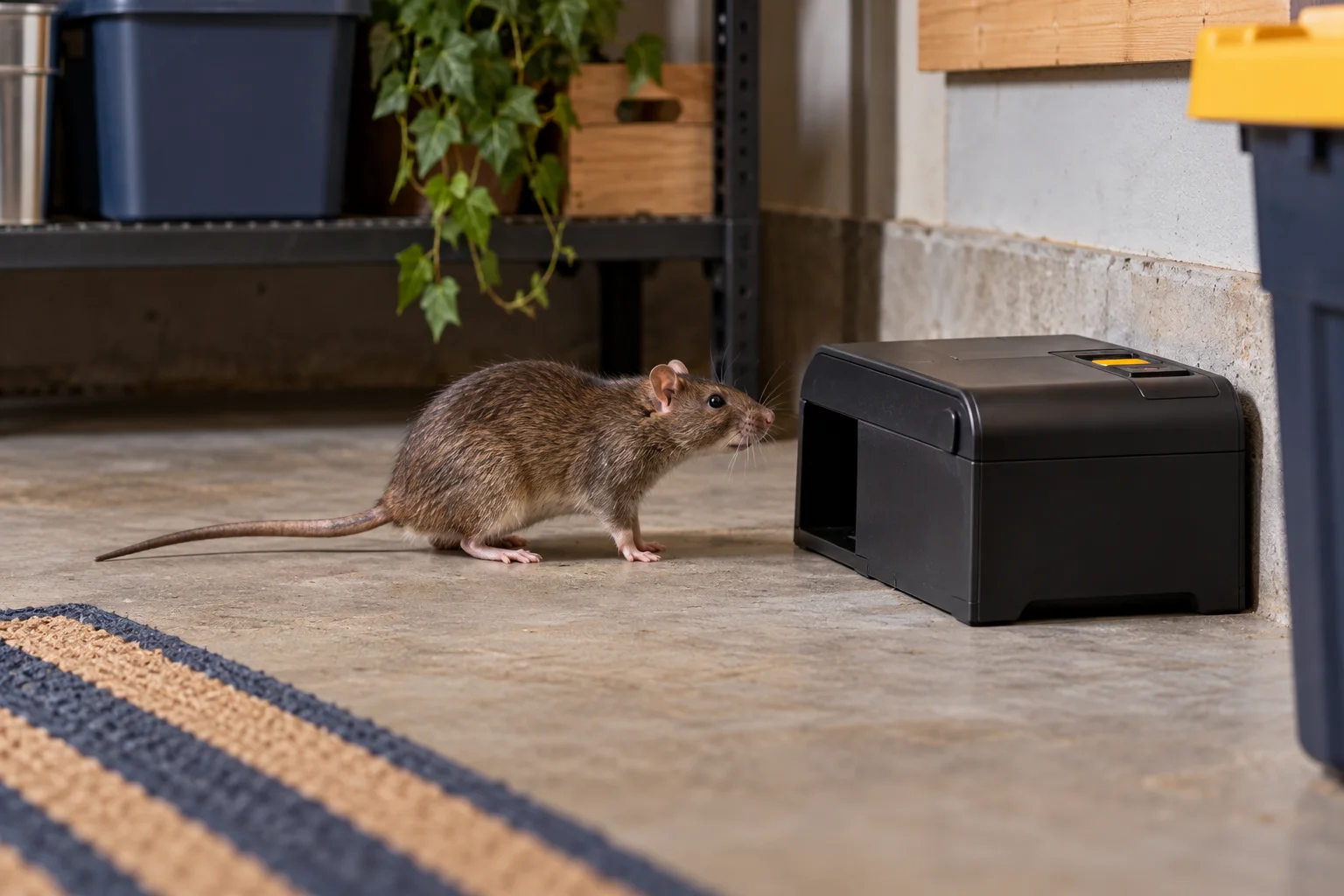
An electrocution trap is a device that uses an electrical circuit inside an enclosure to kill a rodent when it enters. It is different from a snap trap, a glue board, a live cage, and a pesticide bait station. The category alone does not establish that one product is effective, humane, or appropriate for every house. Design, target species, power source, cleanliness, placement, and the manufacturer’s instructions all affect performance.
EPA explains that physical or electrical pest-control products can be regulated as devices and that devices generally do not receive the same premarket registration review as pesticide products. An EPA Establishment Number on a device does not mean EPA has approved its safety or efficacy. Read the actual instructions and claims, confirm whether the model is for rats or mice, and do not treat a marketing label as a substitute for a monitored control plan.
Start with species and evidence
A mouse-sized electric trap may be a poor choice for a rat, and a large rat device in a mouse route may not address the actual animal. Confirm evidence first: droppings, gnawing, tracks, protected travel paths, or a clear photograph. UC IPM notes that young rats can be confused with mice and that roof rats and Norway rats often use different parts of a property. If identification is uncertain, inspect before buying equipment.
CDC recommends traditional rat-sized snap traps for rats around the home and says to choose the right kind of snap trap for mice or rats. That does not prohibit electric devices, but it sets a useful standard: whatever is used must match the animal, be placed where activity exists, be inaccessible to children and pets, and be checked. A device that cannot be inspected daily is a poor DIY choice regardless of its power source.
Placement is more important than novelty
Rats often travel along protected edges. Use current signs to choose a location, not the open center of a room. Keep an electric trap on a dry, stable surface that matches its instructions; do not use it outdoors, in a damp crawl space, or beside a water source unless the specific model is explicitly designed and labeled for that setting. Never run a damaged cord through a doorway, place a device where a pet can investigate it, or modify the electrical parts.
A new object may be avoided at first. CDC describes pre-baiting an unset snap trap to help cautious rats accept it. For an electric device, follow the manufacturer’s specific bait and operating instructions rather than trying to force the same technique. Do not put loose poison in or around the device. Use a small amount of the recommended attractant if the product calls for one, and keep a map of each active device so it is not forgotten in an attic, garage, or storage area.
Consider pet and child access before purchase
An enclosed electric trap may look protected, but a curious pet or child can still interfere with a device placed on the floor, in an open cabinet, or behind an unsecured appliance. Choose a location that is physically inaccessible, or use professional placement. Do not rely on a door that routinely stays open, a low shelf, or the assumption that a pet will ignore a new object. Read the warnings about batteries, cords, moisture, indicator lights, and disposal before using the trap.
A device also creates a cleanup task. Check it daily. Wear gloves when handling a catch, and do not touch a dead rodent bare-handed. CDC recommends spraying a dead rodent and surrounding area with disinfectant, allowing the required contact time, bagging the material and then double bagging it, and disposing of it in a covered trash container as local rules allow. Clean the device only in the manner its manufacturer permits; do not soak or spray electrical components unless the directions explicitly allow it.
Compare it with a conventional snap trap
Traditional snap traps have a public-health recommendation from CDC, are widely available in rat and mouse sizes, and can be reused when disinfected appropriately. An electric trap can be convenient for some accessible indoor sites, but it needs reliable power, a dry setting, and cleaning practices that do not damage it. Neither device repairs the gap that let the rat into the room. The better choice is the one the household can place safely, inspect daily, and remove promptly after a catch.
Do not use glue or live traps as an apparent gentler alternative; CDC advises against them because frightened rodents can urinate. If the route is in a wall, duct, high attic, or unsafe crawl space, use a professional instead of extending cords or pushing an electronic device into an inaccessible void. A trap should produce observable information about activity, not create an electrical hazard or leave a carcass where it cannot be recovered.
End with exclusion and a clear stopping point
Inspect inside and outside for the entry route while traps are active. Seal confirmed gaps only after removal is coordinated, using durable materials appropriate to the feature. Do not block a required vent, drain, chimney, or appliance exhaust. Secure food, feed, and garbage, reduce dense cover near the building, and keep the original route visible for reinspection.
CDC uses a week without captures or new signs as a useful indication that rats are gone. Remove an electric device when the plan is complete, store it according to its instructions, and replace batteries only as directed. If fresh droppings, gnawing, or sightings continue, reassess species, route, and food source rather than adding more devices at random. Electricity does not make a trap a complete rat-control plan.