
AI-generated illustration
A carport can become a protected stop
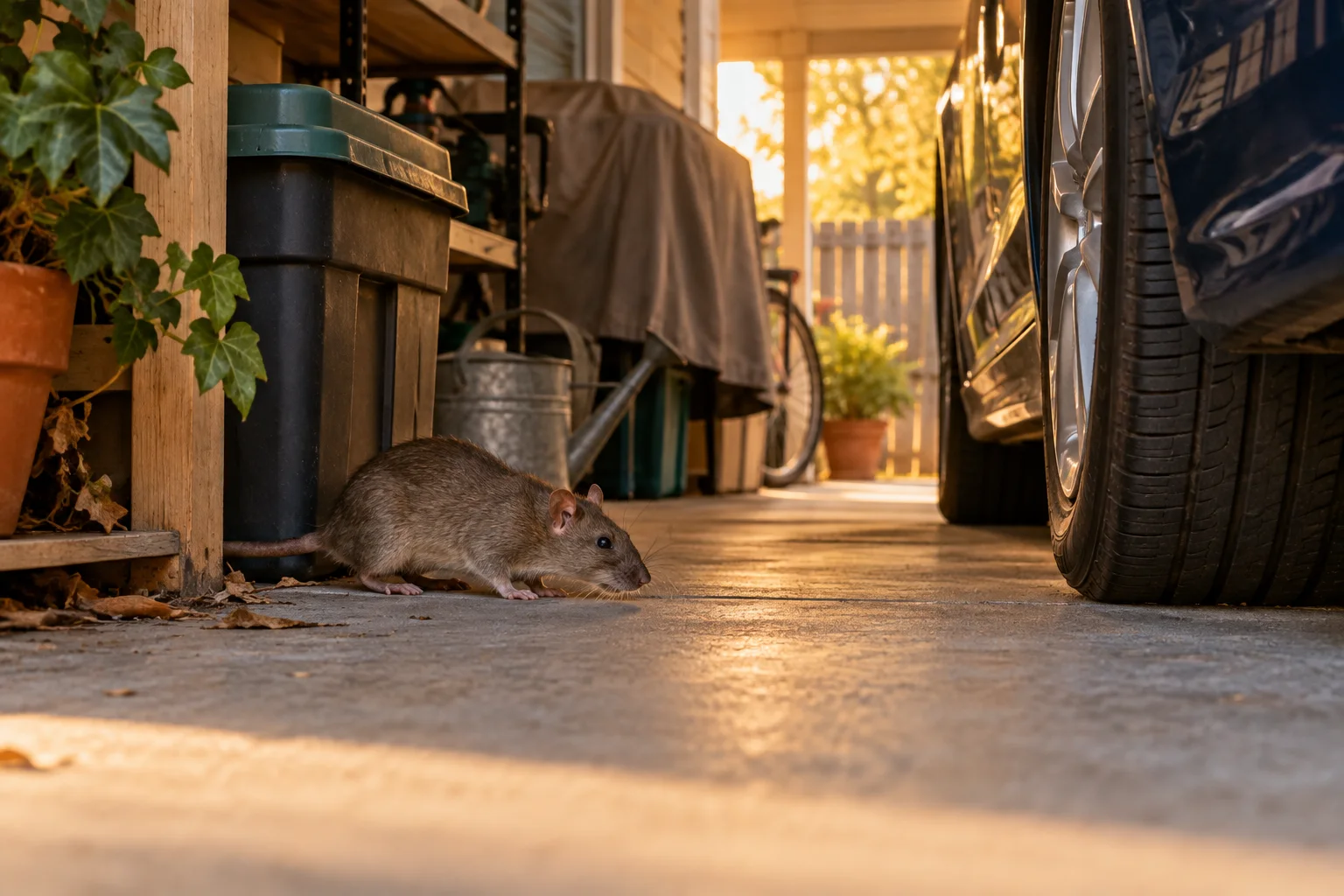
An open carport is not a sealed room, but it can still offer shade, quiet storage, an engine bay, food in a vehicle, and cover along a wall. Rats may use it as a passage between a yard food source and a garage, crawl space, or house entry. A carport sighting is therefore a reason to inspect the surrounding property, not just to look under the car. Fresh droppings, nesting material, gnawed bags, and repeated activity at dusk are more useful than a single quick glimpse.
Start in daylight and keep the floor area visible. Check stored boxes, bins, furniture, grill covers, pet-food bags, garbage, planters, and the edges where the carport meets a house or garage. Look at nearby shrubs, fences, downspouts, and utility lines that create travel routes. Do not reach into hidden storage or handle a rat if it appears. Photograph damage and clear only what can be moved without disturbing waste or creating a fall hazard.
Take away food and nesting opportunities
Remove snacks, beverage containers, pet food, birdseed, and garbage from the carport and vehicle. Store feed and dry goods in sturdy closed containers. Clean grill residue and any spill that might be feeding a rat after dark. Cardboard, fabric, loose paper, and clutter around a wall give rats nesting material and make inspection difficult. Move them into clean, sealed storage or discard them if contaminated. Do not sweep dry droppings while clearing; use the wet cleanup process instead.
Cars also need attention. Before starting a seldom-driven car, inspect under the hood and around air intakes for nests or chewed material. CDC advises airing and inspecting a vehicle before cleaning rodent evidence. If you find chewed wiring or hoses, arrange a mechanic's inspection. A carport rat problem often repeats because the car remains warm and sheltered while the food, storage, and exterior access routes remain unchanged.
Inspect the house-facing side
Carports frequently meet a garage or house wall where pipes, conduit, cable, or framing transitions create openings. Inspect door bottoms, garage seals, foundation edges, vents, and utility penetrations. Look at the roofline above the carport if climbing vegetation, a fence, or nearby tree creates access to an eave. A rat that seems to be 'in the carport' may be using it only as the final walkway to an opening high or low on the house.
Repair verified defects with material suited to each feature. UC IPM warns that foam, plastic, wood, and caulk alone are vulnerable to rat gnawing. A door might need alignment and a new sweep; a vent may need a durable screen that keeps airflow; a utility opening may need a fitted metal detail. Do not block drainage, appliance exhaust, or other functional features. Use an appropriate trade professional for roof, electrical, or HVAC work.
Use protected removal if evidence shows current activity
When fresh signs confirm rats are using the property, place rat-sized traditional snap traps only in protected, accessible routes where children, pets, and non-target wildlife cannot encounter them. CDC recommends snap traps and directs users to place them where rodent signs appear. In an open carport, an unprotected trap is often a poor choice because cats, birds, and other animals can reach it. A secured station or professional placement may be needed.
Do not use glue or live traps. CDC advises against them because trapped rodents can become frightened and urinate. Do not scatter poison around a carport. Outdoor products must be used exactly as labeled, and bait creates risks for pets and wildlife. For a persistent problem that cannot be resolved through sanitation, exclusion, and monitored trapping, ask a licensed professional to assess the population and placement constraints.
Clean waste and protect the vehicle
For small accessible amounts of waste, wear gloves, spray it until wet with disinfectant, wait five minutes or the label contact time, then wipe it up with paper towels. Clean hard surfaces afterward. Do not sweep, vacuum, or blow waste across the open carport. The open air does not make dry cleanup safe, and a breeze can carry particles toward your face or into a car interior.
If a rat has nested in an engine bay, follow CDC vehicle cleanup guidance and have mechanical components checked before regular driving. Do not mask the odor with sprays or run the engine in hopes that heat will solve the problem. Remove the nest, replace a contaminated air filter if appropriate, and correct the carport conditions that supported it. A clean vehicle is only one half of the result.
Keep the carport observable
Recheck the carport after dark with safe lighting, and inspect it in the morning for new signs. A week with no captures and no fresh evidence is a useful CDC milestone after a removal effort. Keep the edge clear of storage and vegetation so a new route cannot develop unnoticed. Check door sweeps and vent screens after storms, repairs, or utility work.
If fresh signs persist, expand outward to nearby garbage, compost, fruit trees, sheds, and neighboring conditions that may be drawing rats to the area. A professional can find difficult routes in a roofline, wall, or shared structure. The goal is not a chemically treated parking space. It is an ordinary, clean carport where food is secured, the vehicle is safe, and the house has no easy opening.