
AI-generated illustration
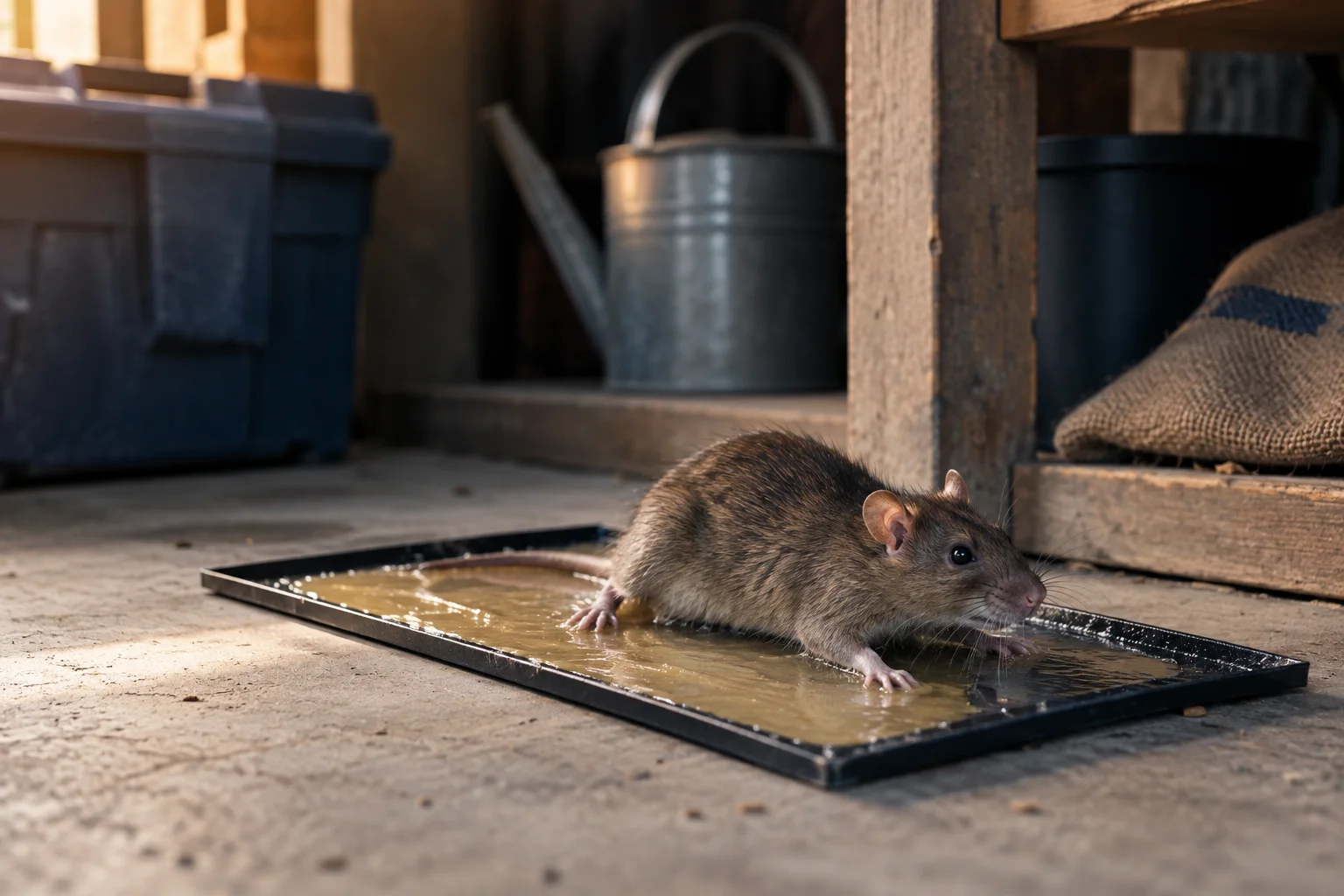
Glue traps do not provide a controlled rat-removal plan
Glue boards may look simple: place an adhesive surface in a runway and wait. In a home, that simplicity is misleading. A frightened, stuck rodent remains alive and stressed, and the person who finds it must still deal with the animal, the trap, and any contamination. The board can also collect dust, be dragged from the placement area, or catch an unintended animal. A hidden board behind furniture does not solve the route that brought the rat into the room.
CDC gives direct public-health guidance: do not use glue traps or live traps for rodents. The agency explains that these traps can scare rodents and cause urination, which can increase the chance of illness. That recommendation is more useful than arguments about whether a particular board seems strong enough. A home rat-control method should be effective, inspectable, and safe for the people and animals who share the space. Glue boards are a poor fit for those goals.
They can make an exposure problem harder to manage
A rat caught on a glue board cannot be handled as casually as a discarded piece of cardboard. It may struggle, spread urine or droppings, and pull the board into a difficult-to-reach area. Reaching into a cabinet, wall void, or cluttered garage to remove it brings hands and faces closer to contaminated material. Pets and wildlife may investigate the movement or scent, creating another animal-welfare and cleanup problem. Leaving a board unattended makes every one of those outcomes more likely.
Do not attempt to solve a stuck animal problem with household oils, solvents, or force. Those responses can injure the animal, expose a person to bites or contamination, and make a surface-cleaning problem much larger. Keep people and pets away, use gloves if you must secure the immediate area, and contact a pest-control professional or local animal-control resource for advice appropriate to the circumstances. Then replace the board approach with a method you can monitor properly.
Use protected snap traps for confirmed indoor rats
CDC recommends traditional snap traps for reducing rodent populations around the home. Choose a trap made for rats, read its instructions, and place it only in a protected location. A trap placed where children, pets, or wildlife can reach it is not a responsible setup. Behind an appliance, inside a secured station, or in an accessible attic or service area may be appropriate when those locations match the evidence and can be checked every day.
For a floor-level route, CDC recommends placing the baited end next to a wall so the trap forms a T with it. Rats tend to travel along protected edges rather than crossing open floor. Use a small amount of bait, such as peanut butter, on the bait pan. Because rats can be wary of new objects, CDC suggests pre-baiting an unset trap until the bait is taken, then setting it. This is a practical way to use their existing travel pattern without creating an unattended live-capture problem.
Place traps based on evidence, not hope
Look for droppings, gnaw marks, nibbled food, nesting material, and protected travel routes. Those signs should determine where a trap goes. A rat in an attic may use a ledge, beam, or protected utility route rather than a kitchen floor; a rat behind a stove may stay close to the wall. UC IPM notes that roof rats can use elevated routes and that the best location may matter more than the exact style of snap trap. Elevated or complicated placements should be secured and handled by someone who can reach them safely.
Avoid scattering traps throughout a room or setting them where they cannot be checked. Do not fasten a trap to roofing or climb onto a roof just to put one in the apparent path of an animal. An animal on shingles is a clue to inspect branches, eaves, vents, and other access points. A professional can safely investigate an elevated route and choose protected equipment placement without puncturing the roof or creating a fall hazard.
Remove the reason rats are entering
No trap can compensate for an open building envelope. CDC recommends finding and sealing rodent entry points, while UC IPM emphasizes sanitation, structural exclusion, and population control as parts of successful rat management. Inspect foundation and roofline gaps, doors, vents, crawl-space openings, pipes, wires, and cable penetrations. For climbing routes, also inspect vegetation, fences, and stored objects that connect cover to an eave or upper wall.
Make repairs with materials that match the feature and resist gnawing. Soft foam, plastic, wood, and caulk are not reliable stand-alone barriers against rats. Do not block a necessary vent, drain, chimney, or appliance exhaust in an effort to close a hole. A roofer, HVAC technician, plumber, electrician, or pest-exclusion professional may need to complete the detail safely. When access points are repaired after active rats have been removed, traps stop being the only line of defense.
Handle rodent waste and catches safely
Whether a rat is caught in a snap trap or you find droppings near a former glue-board location, do not sweep or vacuum the waste dry. CDC says to wet urine, droppings, nests, and dead rodents with disinfectant and let the material soak for five minutes or for the label's required contact time. Use paper towels to wipe up the material, then disinfect hard surfaces. Wear gloves, wash the gloves before removing them, and wash bare hands with soap and warm water afterward.
CDC advises double-bagging a dead rodent and used trap for disposal in a covered garbage container. A traditional snap trap can be disinfected and reused using the agency's process. These procedures are another advantage of a monitored snap trap: you can find the catch, clean the area, and know what happened. With a glue board pulled under a cabinet or into a void, you often lose that control and the evidence needed to judge whether the rodent problem is ending.
When to get professional help
Call a qualified pest professional when rats are active in inaccessible walls, ducts, crawl spaces, high rooflines, or when traps and repairs have not ended fresh signs. Ask how the person will identify entry points, protect pets and children, monitor equipment, remove catches, and confirm that activity has stopped. A clear answer should include exclusion and follow-up, not only a product placement. For an immediate stuck-animal situation, keep the area isolated and ask for practical removal guidance rather than leaving the board in place.
The best alternative to glue boards is not a single substitute product. It is a short, monitored period of protected rat-sized snap trapping paired with durable exclusion, food and clutter control, and safe cleanup. CDC advises a week without captures or fresh signs as a useful point for deciding the rats are gone. That result is kinder to the household, safer to manage, and much more likely to last than a sticky board hidden in a corner.