
AI-generated illustration
There is no universal coverage answer
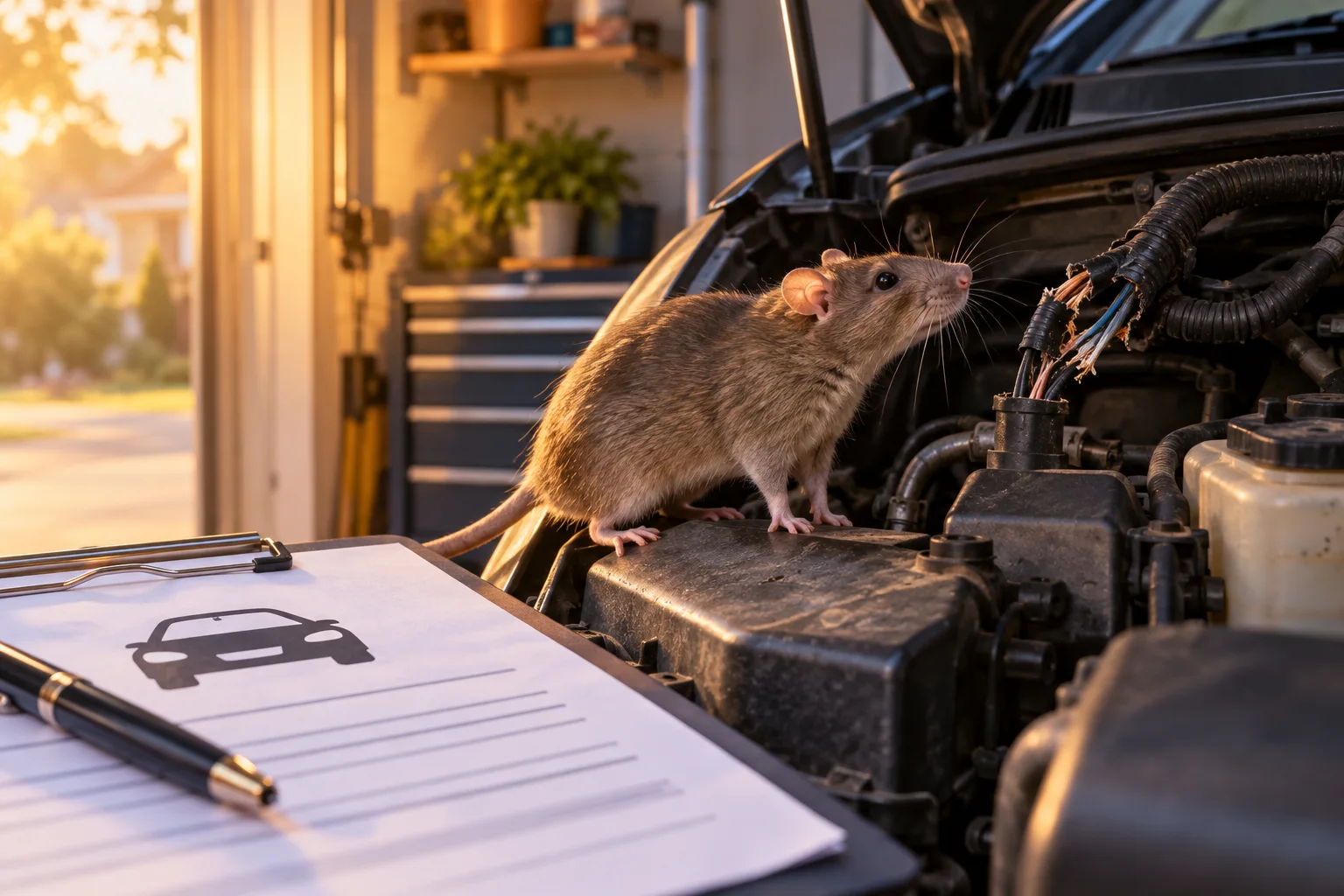
A rat-chewed wire or nest in an engine bay can be expensive, but the word 'covered' depends on the actual insurance contract. Policies differ by insurer, state, vehicle, coverage selection, deductible, exclusions, maintenance history, and how the loss is documented. Do not rely on a neighbor's claim, an online forum, or a repair shop's assumption. Open your declarations page and policy documents, then ask the insurer how your specific coverage responds to rodent damage before authorizing work based on expected reimbursement.
In many auto policies, comprehensive coverage is the part often associated with damage from events other than a collision, and animal-related damage may be considered there. That is not a promise that every rodent claim will be paid. A deductible can exceed a modest repair, limits can apply, and an insurer may need to inspect the vehicle or review photographs and estimates. The useful first step is a direct coverage question tied to the vehicle and date of loss.
Document the damage before cleaning it away
If you find nests, droppings, chewed insulation, damaged wires, or a warning light, take clear photos and video before cleaning or discarding material. Note the date, where the vehicle was parked, when it was last driven, and whether it had previous rodent issues. Keep any repair invoices, towing receipts, and diagnostic reports. A mechanic's description of the affected component can be more useful to an insurer than a general statement that a rat was seen nearby.
Do not leave the vehicle unsafe while an insurance question is pending. If wiring, hoses, air intake components, or warning systems may be affected, ask a qualified mechanic whether it should be driven. Insurance review and mechanical safety are separate decisions. Do not make a temporary household-tape repair to conceal damage, and do not throw away an old part unless the shop and insurer have agreed on what documentation or retention is needed.
Ask the insurer specific questions
Call the insurer or use its official claims channel. Ask whether your policy includes comprehensive coverage, whether rodent damage is potentially covered, what deductible applies, whether an inspection or estimate is required first, and whether you should open a claim before repairs. Ask how rental-car coverage, towing, and diagnostic charges are treated if those are relevant. Write down the representative's name, the date, and the claim or reference number.
Do not assume that a verbal general answer settles the claim. Ask for relevant policy language or a written explanation of the next step. If the insurer denies coverage, request the reason and the policy provision it relies on. You can then compare it with your policy and, where appropriate, ask the insurer's claims-review or consumer-assistance channel about questions. Avoid promising a repair shop that insurance will pay until the insurer confirms the claim handling.
Prevent more damage while the claim is handled
A vehicle is often visited because the parking area offers food, cover, or a route, not because there is something uniquely attractive about the model. Remove snacks, pet food, trash, and stored feed from the vehicle and nearby garage or carport. Check garbage bins, compost, birdseed, dense vegetation, and clutter around the parking area. UC IPM notes that a weighted car cover can discourage rodent access to the engine when it reaches the ground, but it cannot fix the conditions around it.
Inspect a garage door seal, carport storage, utility openings, and nearby wall gaps. If a car sits for long periods, open the hood periodically and inspect for fresh nesting material before starting it. CDC recommends airing out and inspecting vehicles that have been idle, and it advises checking air intakes and filters. Keep a record of these preventative actions. It may help identify a recurring route even though it does not determine insurance coverage.
Clean safely and use qualified repair
Do not vacuum or high-pressure spray rodent waste in a car before disinfecting it. CDC advises wetting the material with disinfectant, allowing five minutes or the label contact time, then picking it up with paper towels and cleaning the area. If nesting material is in the air intake system, CDC advises removing it and the air filter before fitting a replacement. Wear gloves and wash hands afterward.
A mechanic should assess chewed wiring, filters, hoses, and other components. UC IPM notes that rodents can cause significant vehicle wiring damage. Ask for an itemized estimate that distinguishes diagnostics, cleanup, replacement parts, and labor. This gives you a useful repair record whether you pay yourself or pursue a claim. It also makes it easier to compare estimates without treating a health cleanup, a prevention upgrade, and a mechanical repair as the same job.
Avoid coverage myths
A policy's age, payment history, or the fact that the car was parked at home does not itself determine a result. Nor does the phrase 'animal damage' automatically answer a rat-damage question. Only the insurer and policy terms can evaluate the claim facts. Be skeptical of anyone who guarantees approval, advises you to change the facts, or suggests delaying disclosure. Accurate documentation and a prompt question are safer than a story adjusted to fit an assumed category.
If a claim is not worthwhile because of the deductible or coverage decision, prevention remains valuable. Repair the vehicle correctly, secure food and storage, reduce nearby rodent shelter, and inspect before driving a seldom-used car. The best outcome is a safe car and a parking area that no longer supports nests. Insurance can be part of the financial response, but it is not a substitute for the mechanical repair and rodent-control work that prevent another loss.